Toronto
All My Puny SorrowsToronto is more than Yolandi Von Riesen’s address: it is the place from which she tries to keep a connection with Elfrieda Von Riesen across distance, and the setting in which she imagines a different kind of care for her sister. Its physical landscape prompts reflections on change and grief, while its homes—first an apartment and later a dilapidated house—mark the movement from separation toward shared family life.
Landscape and the passage of time
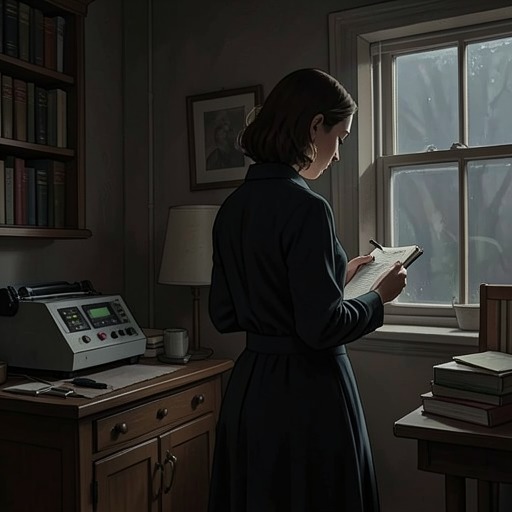
From her third-floor Toronto window, Yolandi considers how much the local shoreline has changed. She recalls that Lake Ontario once extended much farther inland, when it was known as Lake Iroquois, and that its waters receded after an ice dam melted roughly 13,000 years ago. The present lake seems diminished beside that earlier scale. The history gives the city a deep temporal dimension: its familiar boundaries are only the latest arrangement of a landscape shaped by immense change.
A hill offers a smaller, immediate measure of Toronto’s terrain. Going north means walking uphill; going south means walking downhill. Yolandi also notes that Davenport follows the route of an Indigenous trail along the ancient shoreline. She wonders about the name, speculating that it may have had an earlier origin or might even have been imagined by First Nations people tired of sitting on rocks and in canoes. The passage makes the city’s streets legible as layers of human use and geological history, rather than as a fixed urban map.
From these observations, Yolandi turns to the pace at which continents move and to her uncertainty about whether they are drawing together or moving apart. What holds her attention is the slow rate of change, measured against grief, which may pass quickly or seem to last forever. Toronto thus supplies the setting for an inward comparison: geological time is almost impossibly long, while the experience of mourning can feel either fleeting or permanent.
A home separated from Winnipeg
Toronto is also the place from which Yolandi writes to her absent sister. In an imagined meeting, she pictures herself arriving at a café in Winnipeg, where Elfrieda has chosen a window table and gathered French library books. The scene is not an actual reunion but a daydream built from familiar gestures and the expectation that her sister has something to share. By placing the imagined encounter elsewhere, the passage makes Toronto feel like the far side of a separation Yolandi is trying to bridge through writing.
That distance is sharpened by the circumstances of their parting. Nearly two weeks after saying goodbye to Elfrieda at her home in Winnipeg and promising to write letters, Yolandi is in Toronto when she learns that the opening concert is back on. Elfrieda has changed her mind again; Nic reports that rehearsal went well and that Elfrieda seems excited, though drained. The news gives Yolandi reason to follow her sister’s prospects from afar, but it does not erase the absence. Her Toronto workday continues amid construction noise across the street, while the letter turns toward how much she misses Elfrieda.
Toronto as a possible place of care
When Yolandi learns that Nic is going to Spain, she researches possible ways for Elfrieda to pursue assisted death. She compares a route involving Mexico with the legal option she finds in Switzerland, where access would depend on an assessment of Elfrieda’s suffering. She also recognizes the unresolved practical and ethical questions: Nic and Lottie would need to agree, and Yolandi worries that discussing a plan could eclipse any remaining possibility that Elfrieda might want to live. Toronto is where she weighs these possibilities from a distance, not where she resolves them.
A different idea comes to her after she finds the Coleridge poem from which Elfrieda drew AMPS. Yolandi imagines inviting her sister to Toronto after discharge from hospital, so they can spend time together without pressure. She would be at home, Nora would also be there, and they could walk, talk, and rest before considering the Zurich plan at greater length. In Yolandi’s thinking, beginning in Toronto could make any later departure easier, but the immediate offer is also a chance for Elfrieda not to be alone. She presents the proposal to Lottie and describes it as worth trying; she imagines renting a piano if Elfrieda wants to play, or even getting a boat. Toronto becomes an alternative to deciding everything at once: a place for company and time, without a guaranteed outcome.
The house and a changed household
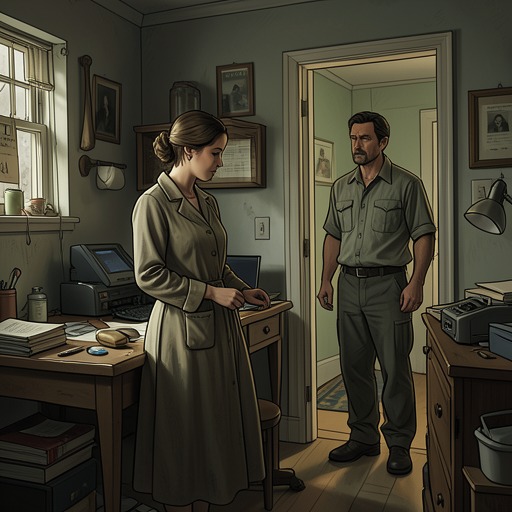
Later, Yolandi buys a failing Toronto house because time is running out and her mother is coming. The real-estate agent says it has good bones, a reassurance Yolandi takes almost literally. Its surroundings are difficult: it is near a polluted lake, a funeral home, a mental hospital, and a slaughterhouse, with a car-parts factory beside the lane. The house itself has cracked or missing walls, broken stairs, damaged floors, a failing roof and foundation, and a yard of dirt and garbage. Yolandi describes collecting discarded condoms and needles from the yard with a long stick and putting them in a blue pail, while the lead-contaminated ground and the gate that opens the wrong way make ordinary upkeep an ongoing problem.
The house nevertheless becomes a shared family home. When Lottie first sees it, she arrives with Yolandi and Nora during an electrical storm. The umbrella Lottie struggles to manage is carried off by the wind; after retrieving it, she throws it into a toxic, garbage-filled moat beside the factory. The family laughs together, and the scene offers a moment of collective ease within the house’s harsh surroundings. By the time the narrative states that Lottie is living there, the household consists of mother, daughter, and granddaughter. Toronto has shifted from the distant base of Yolandi’s correspondence and difficult calculations into a place where the family can live together, even though the move does not repair the house or settle the crises that brought them there.
Narrative significance
The city gathers the book’s competing measures of distance. Its ancient shoreline and moving continents prompt Yolandi to think about grief on a scale larger than an individual life; its streets, apartment, and house make that grief concrete in daily surroundings. Toronto is also a place of provisional choices: an imagined reunion, a possible stay for Elfrieda, and an actual home for Lottie and Nora. The contrast between the welcoming life Yolandi hopes to offer her sister and the damaged house she actually inhabits keeps the city from becoming a simple refuge. It is both an imperfect setting for care and the place where care can be attempted.